AI as an operating layer.
AI wasn’t bolted onto PsTally as a feature. It became another operating layer of the product — work that used to need a person watching a screen, reading a report, or writing a message now happens on its own, grounded in the lounge’s live data. Three places it runs today, shown from a real lounge.
A console left running without a logged session is revenue the lounge never sees — and no owner can watch every bay all night. Now the moment it happens, it surfaces on its own: here, Bay 2 flagged after 14 minutes on with no session open. Behind that is PsTally Monitor, an autonomous Windows service that runs unattended — self-starts, self-recovers, self-updates — watching PlayStation and Xbox consoles over Wi-Fi and reconciling live activity against open sessions.
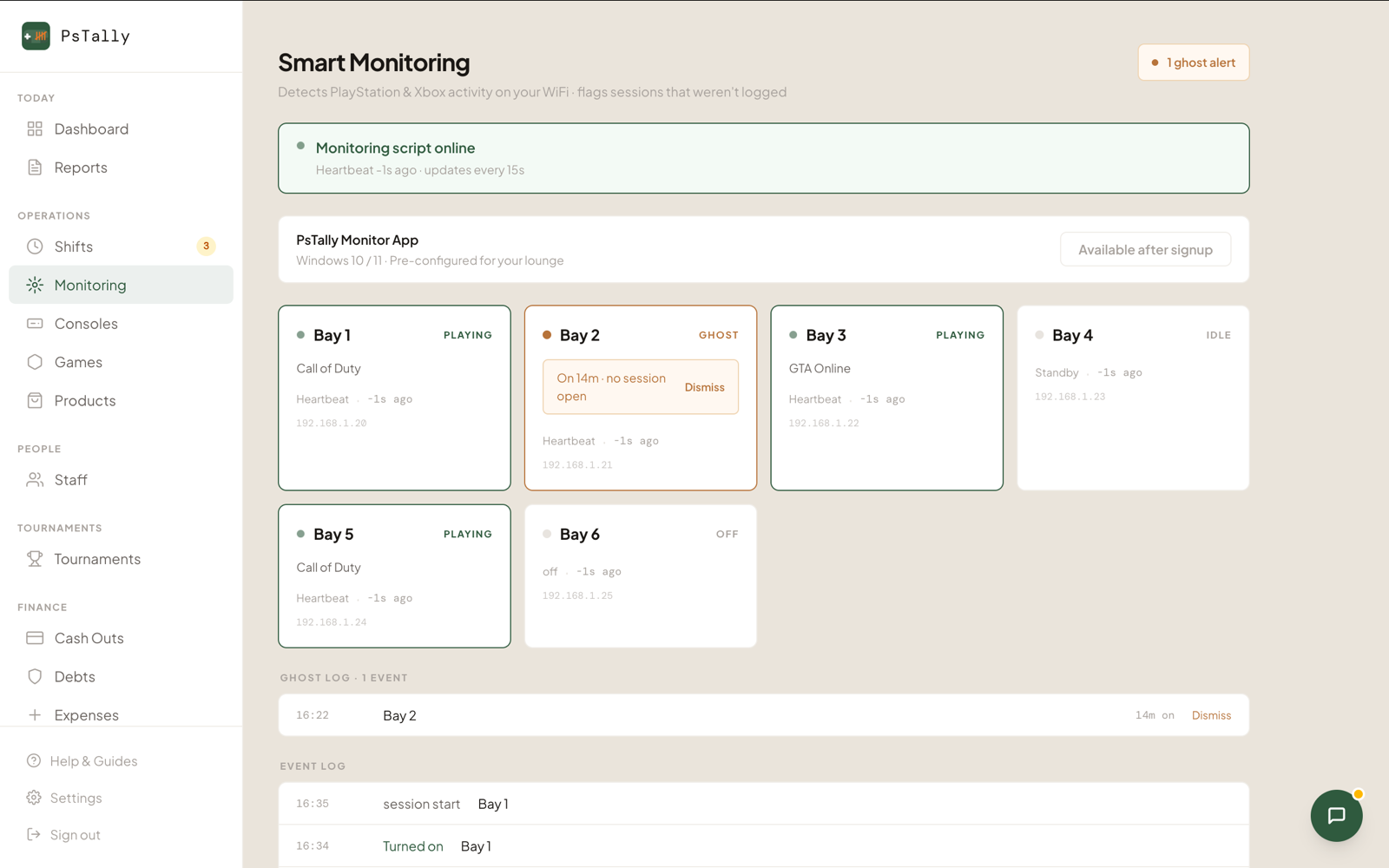
live lounge · Bay 2 flagged GHOST — on 14m, no session open
Owners used to switch between reports, dashboards, and spreadsheets to understand how the lounge was performing. Today they can simply ask — “Which shift fell short?” or “Did anything unusual happen today?” — and get an answer grounded in their own operational data. The assistant isn’t trained on the business: each question is grounded in live operational data — sessions, reconciliations, revenue, credit, and anomalies — before it reaches Claude, so the model reasons over the current state of the lounge rather than relying on memory. Here, the week reads back as 71 sessions and KES 9,130.
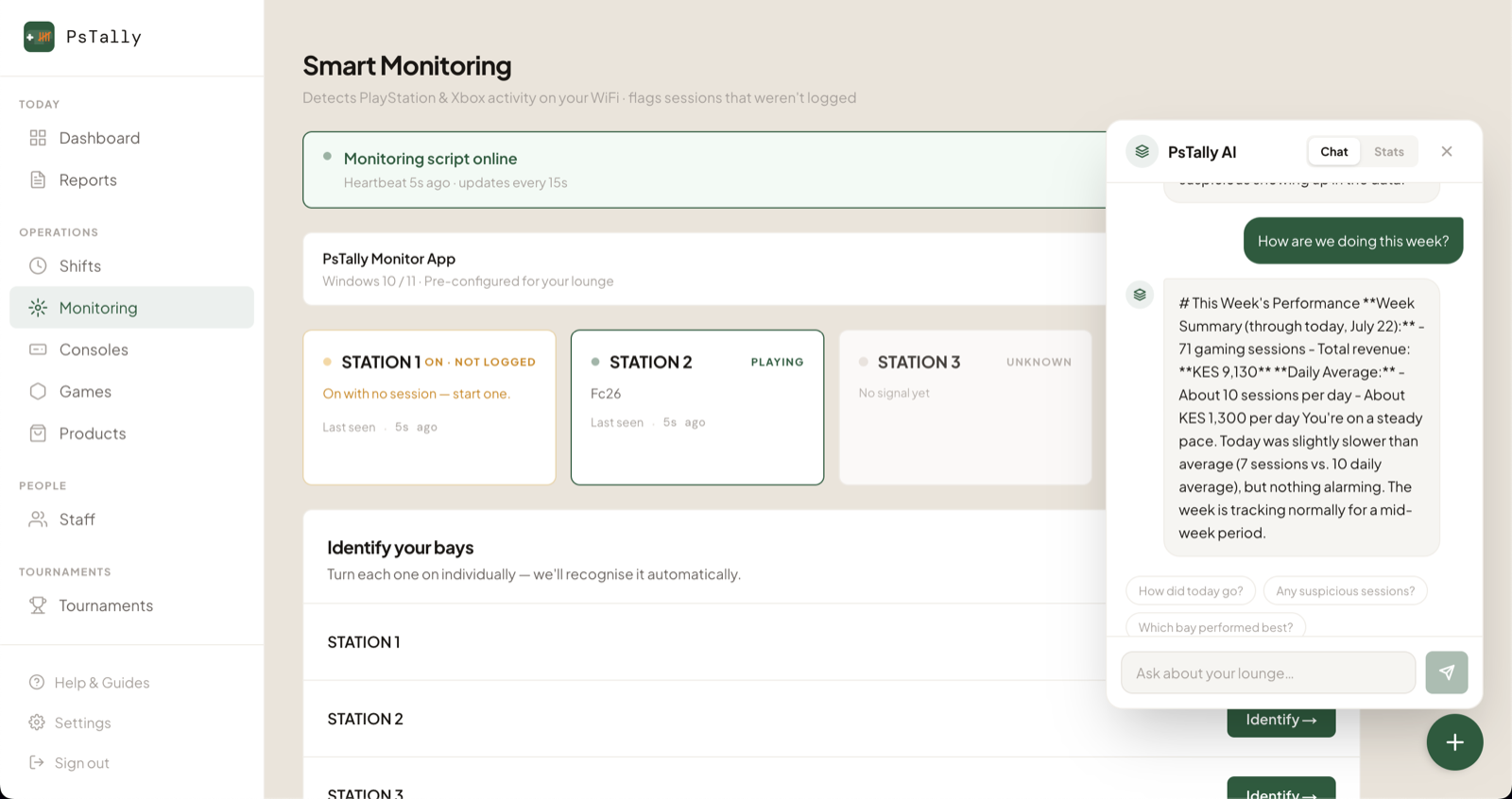
live lounge · grounded answer computed from the lounge’s own data
Lounges that sign up and stall used to go quiet — re-engaging them by hand rarely happened, so the revenue just leaked. Now it runs as a workflow: stalled accounts are found, Claude drafts outreach personalised to each one, and everything pauses for human approval before a single message sends. This run moved 21 accounts through query → draft → approve → send. AI does the drafting; a person still holds the send button.
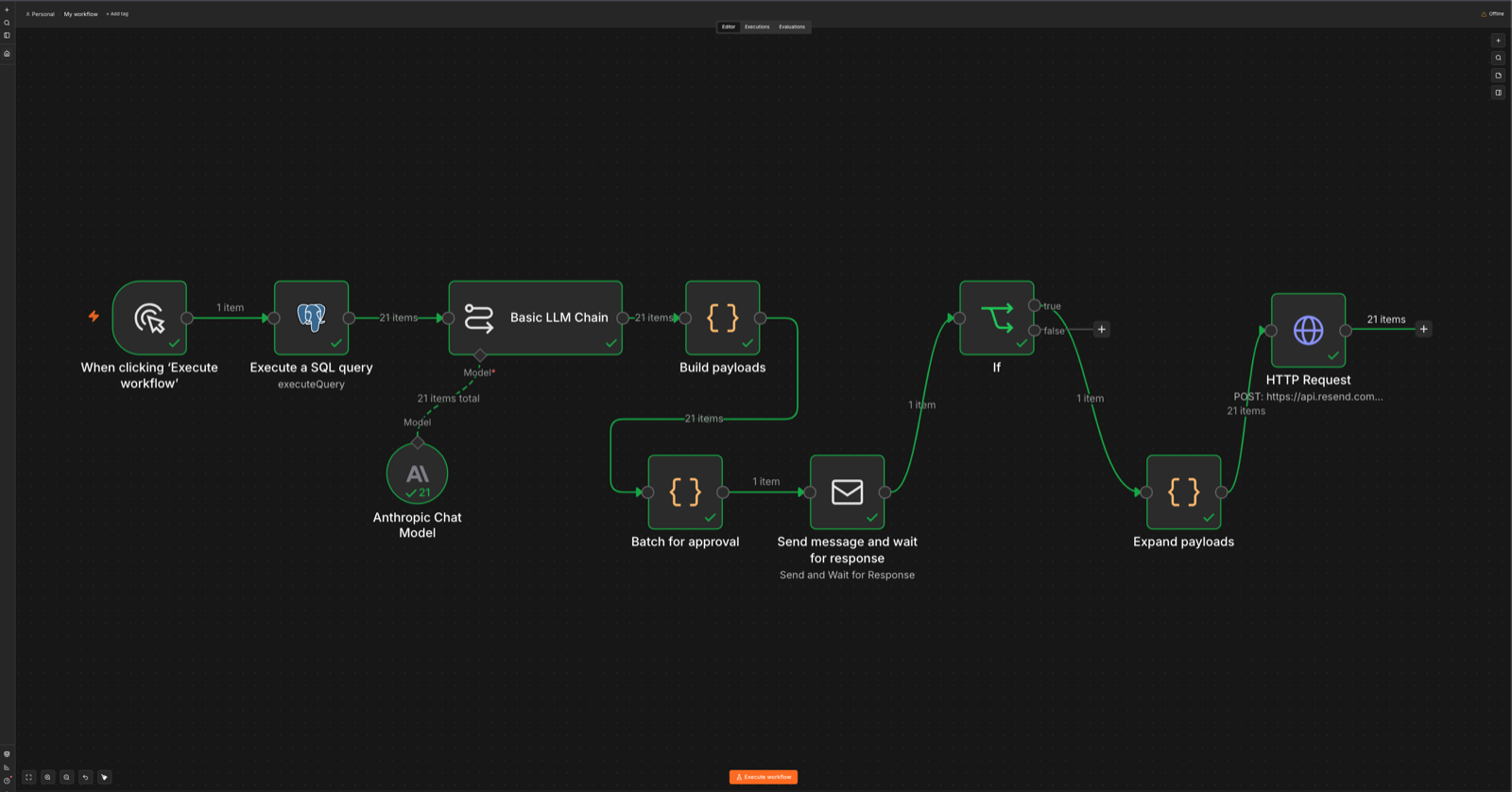
21 accounts · SQL → Claude draft → human approval → send
Console monitoring is live to explore in the demo. The Monitor app and the AI assistant are disabled in the shared demo, so they’re shown here as screenshots from a real lounge.